A Journey
The Desert, The Maze and The Labyrinth
Chapter 1: It All Begins in the Desert
A grain of sand, a neurone, one single idea, has no power. It only has potential.
When entering this world, the human mind is like a desert. There is potential in every grain of sand, but it’s the connection between them that write the story and set the stage.
A newborn’s brain is incapable of making sense of the world around him. Lost in a desert, it perceives the
existence of it’s surroundings like an endless horizon of shape shifting dunes.
As the brain develops, the shape shifting dunes start to organize themselves in patterns. The human being is a patter-seeking creature. The baby explores the world with curiosity in order to form these patters.
But the baby is not alone. His companions are his care takers, and they will guide him through this journey of discovery. The role of the care taker is to explain
- the physical world - to teach the baby the name of the objects he sees;
- and the immaterial world - to teach the baby a set of ideas and how to navigate this world.
And so, a structure starts to form inside the newborn’s brain.
Chapter 2: Getting Lost in the Maze
What seemed at first an endless horizon now becomes finite.
As the brain develops further, the limits of the world are being discovered. During this next stage of live the child is lost in a maze of ideas.
The adults around him, also human beings, as pattern-seeking creatures, prefer ideas that fit a pattern. They impose these pattern-fitting ideas on the child calling them rules and guidance.
Now, the issue is, human beings are the same but also different. The pattern of thoughts and ideas of two
individuals might seem the same at a first glance, but is never exactly the same, it’s a spectrum that varies from similar to opposite.
As the child interacts with the others, the brain becomes a maze of other people’s ideas. He must now explore each corridor, each twist and turn, each dead-end, and he must learn which pathways lead to reward, which pathways are dangerous and where are the dead-ends.
The child will then become an adult and depending on his ability to navigate the maze, he will:
- thrive,
- stagnate in a comfort zone
- fail.
Chapter 3: The Maze Becomes a Labyrinth
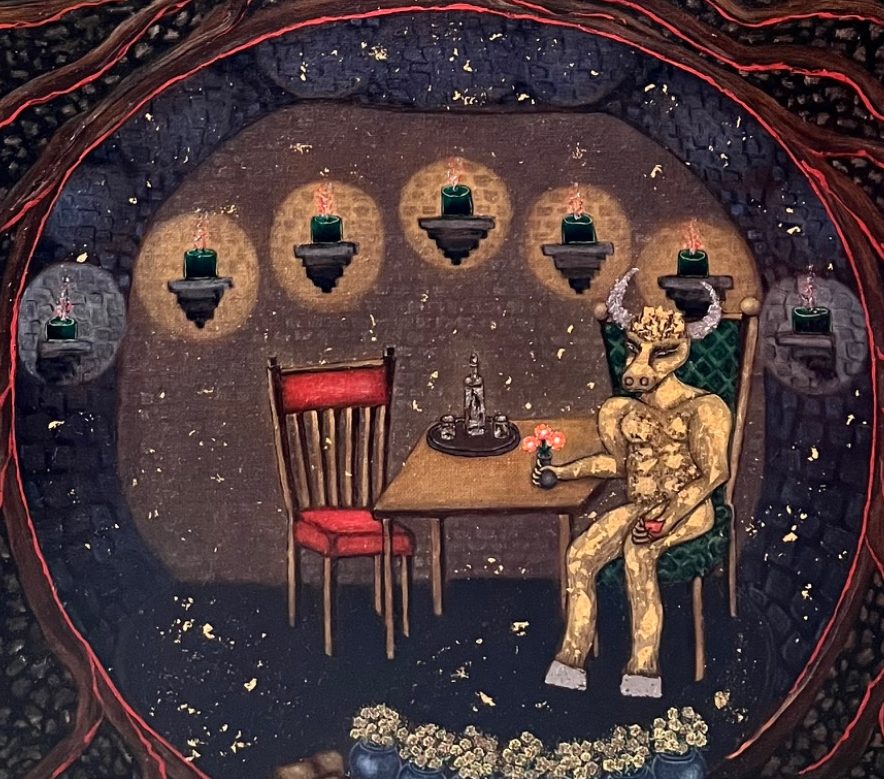
The human mind is a maze.
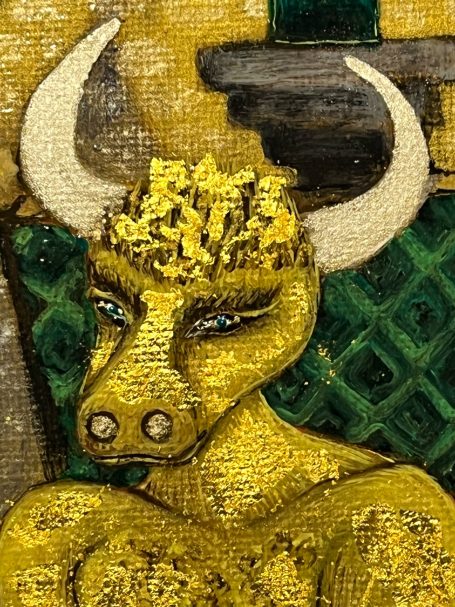
The corridors we know represent the conscious mind, the ones we are not aware of represent the subconscious. Hidden in the subconscious is the Minotaur, the Shadow, who seeks to take control.
Jung says: Until you make the subconscious conscious, it will direct your life and you will call it fate.
To make the unconscious conscious, one must be brave and journey deep inside one’s mind, like Theseus went on search of the minotaur in Daedalus' maze, following a line of thought so one doesn’t get lost and can find the way back to the surface.
Whatever the mind hides in the subconscious is painful and the encounter with the Minotaur is dangerous. It might cause serious wounds, sometimes the encounter might burn the self to ashes. But one must remember, only by exposing the self to the pain of being burned to ashes, the Phoenix resurrects.
In psychology, the minotaur is part of the self, so it shouldn’t be killed, but befriended. Only then the maze will no longer be a place where one could become lost,
but a labyrinth, a know pathway for descending inside the depths of the mind, a know pathway of ascending on a journey to resurrection.